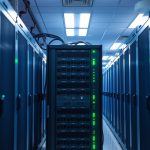
In the high-stakes world of financial trading, network latency is the enemy. For High-Frequency Trading (HFT) firms and global exchanges, the speed of data transmission is not just a technical metric; it is the primary determinant of profitability. As financial institutions expand their digital footprints, the need to buy IPv4 addresses has become a critical infrastructure priority. Unlike standard corporate networks, trading platforms require contiguous, clean, and geographically strategic IP blocks to ensure seamless execution and regulatory compliance.
Need IPv4 addresses?
Browse clean, RIPE-verified subnets at $0.50/IP/month.
The Critical Role of IPv4 in Financial Trading
While the internet has transitioned toward IPv6, the financial sector remains heavily reliant on IPv4. This reliance is driven by legacy infrastructure, compatibility with exchange gateways, and the specific routing requirements of low-latency networks. When financial institutions buy IPv4 addresses, they are not merely purchasing number space; they are acquiring the necessary real estate to build optimized, redundant networks that can handle microseconds of difference in trade execution.
Latency and Geolocation
For HFT firms, the physical location of an IP block can significantly impact latency. Proximity to major exchange data centers—such as the NY4 in New Jersey, LD4 in London, or TY3 in Tokyo—is paramount. Acquiring IP blocks that are already recognized by regional internet registries (RIRs) as being local to these hubs ensures that traffic is routed efficiently. BGP (Border Gateway Protocol) optimization relies on stable IP announcements, and owning your own blocks allows for finer control over routing policies compared to leasing from a third-party ISP.
Security and Reputation Management
Financial platforms are prime targets for DDoS attacks and IP spoofing. Using IP space with a clean history is vital. When you buy IPv4 addresses through a reputable marketplace like IP4 Market, you gain access to verified “clean” blocks that are not blacklisted by spam filters or security watchlists. This ensures that trading orders are not delayed by security firewalls at the exchange level.
Why Purchasing Dedicated Blocks is Essential
While leasing IP space is a viable short-term solution, purchasing offers long-term stability for trading platforms. Leases can be revoked, and prices can fluctuate wildly based on market scarcity. Owning the asset allows the IT manager to treat the IP block as a capital asset, depreciating it over time while ensuring uninterrupted service.
The Scarcity Factor
The exhaustion of IPv4 pools at RIRs like ARIN and RIPE NCC has created a seller’s market. Prices have steadily risen as cloud providers and telecoms hoard resources. For financial firms, securing a /24 or larger block now prevents future operational bottlenecks. Waiting to acquire resources until a network expansion is live can result in significant downtime or exorbitant spot-market prices.
Regulatory Compliance
Financial regulations, such as SOX (Sarbanes-Oxley) and MiFID II, require strict audit trails of network access and data integrity. Ownership of IP blocks simplifies the audit process. It provides clear title and registration data, which is easier to present to auditors than complex leasing agreements or nested sub-allocations from upstream providers.
Navigating the IPv4 Transfer Process Safely
Transferring IPv4 blocks involves complex administrative procedures with RIRs. The process requires pre-approval, rigorous vetting of the seller’s ownership rights, and the correct reassignment of registration records. For a network engineer, the bureaucracy can be as challenging as the technical deployment.
This is where utilizing a specialized marketplace simplifies the workflow. The standard transfer lifecycle includes:
- Verification: Confirming the seller has the right to sell and the block is free of liens or encumbrances.
- Contracting: Using escrow services to hold funds until the transfer is recorded by the registry.
- RIR Submission: Filing the transfer request (e.g., an 8.2 transfer in ARIN or a M&A transfer in RIPE).
- Network Reconfiguration: Updating BGP announcements and peering agreements.
Strategic Considerations When You Buy IPv4 Addresses
When evaluating blocks for a trading environment, specific technical attributes must be prioritized over price alone.
| Attribute | Importance for Trading | Notes |
|---|---|---|
| Block Size | Critical for BGP | Most exchanges require a minimum /24 to accept BGP announcements. Smaller blocks may be filtered. |
| Contiguity | High | Contiguous blocks (e.g., a single /22 rather than four /24s) reduce routing table complexity. |
| Regional Status | Very High | Ensure the block is transferred within the same region as your data center to avoid cross-regional transfer hurdles. |
| Reputation | Severe | Check SpamHaus, AbuseIPDB, and SURBL histories to ensure the block is clean. |
Pre-Transaction Due Diligence
Before committing capital, network engineers should run a background check on the ASN (Autonomous System Number) previously associated with the block. If the block was used for botnet command and control or spam relaying, it may take months to rehabilitate the IP’s reputation with security vendors.
Why IP4 Market is the Preferred Choice
For financial institutions that cannot afford operational risk, IP4 Market provides a structured, secure environment to acquire IPv4 assets. Unlike generic marketplaces or broker-led deals, IP4 Market focuses on transparency and technical validation.
- Verified Inventory: Every seller is vetted to ensure legal ownership, preventing post-purchase legal disputes.
- Escrow Protection: Funds are held securely until the RIR transfer is fully completed and recorded in your company’s name.
- Competitive Pricing: With access to a global pool of sellers, financial firms can secure blocks at market rates without the premium added by obscure intermediaries.
- Expert Support: The platform understands the nuances of regional transfers, helping you navigate the specific requirements of ARIN, RIPE, APNIC, and LACNIC.
Ensuring Uptime for Global Finance
In an industry where a millisecond delay can equate to millions of dollars in lost revenue, network infrastructure must be flawless. By choosing to buy IPv4 addresses through a trusted platform like IP4 Market, financial trading platforms gain control over their connectivity, enhance their security posture, and secure the IP resources necessary for future scalability.
Summary
For IT managers and network engineers in the financial sector, IPv4 is a scarce and valuable asset. Purchasing dedicated blocks offers stability, control, and compliance advantages essential for high-frequency trading. IP4 Market streamlines this process, offering verified sellers and secure transactions to ensure your trading platform remains online and competitive.
Need IPv4 space? Lease RIPE-verified /24–/22 subnets at a flat €0.50/IP per month — LOA + RPKI/ROA in minutes, instant company verification, automatic renewals. Browse available subnets →