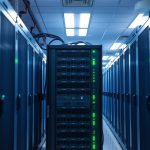
Regional IPv4 pricing has become one of the most closely watched indicators in the networking industry, and data center expansion sits behind much of its recent volatility. Hyperscalers, colocation providers, and cloud operators are all racing to build capacity in emerging markets, and the hunger for clean, routable IPv4 blocks has intensified accordingly. If you’re a network engineer or IT manager planning acquisitions in 2025, understanding how these construction cycles translate into price movements isn’t optional anymore. It’s core procurement strategy — and platforms like IP4 Market provide the transaction data needed to navigate it without overpaying.
Why Data Center Growth Is Reshaping IPv4 Demand
Every new data center facility needs substantial public address space, and the requirements go well beyond the servers themselves. Operators need IPv4 for customer-facing services, load balancers, NAT pools, DNS infrastructure, and — still, in 2025 — legacy application compatibility. The numbers get big fast: an estimated 5 to 6 gigawatts of new data center capacity is under construction globally right now, much of it driven by AI workloads. The cumulative address requirements are enormous.
Three forces compound this demand:
Need IPv4 addresses?
Browse clean, RIPE-verified subnets at $0.50/IP/month.
- AI and GPU cluster deployments: Training environments frequently require public addressing at scale for data ingestion and distributed workloads. A single project can consume an entire /22 or /21.
- Cloud on-ramps and edge buildouts: Regional edge facilities in secondary markets need IPv4 for peering, CDN caching, and enterprise interconnects.
- Enterprise IPv6 transition lag: Two decades of advocacy later, dual-stack deployments still require full IPv4 parity. Expansion rarely replaces legacy addressing needs — it just adds to them.
Practical takeaway: if your organization is planning capacity expansion, start sourcing address space six to twelve months before deployment. Wait until the build phase and you’ll be negotiating in a seller’s market, particularly in regions with active construction booms.
Regional IPv4 Pricing: Where the Market Is Heating Up
Pricing diverges significantly depending on where infrastructure investment is concentrated. IPv4 is technically a global resource — but real-world prices vary by RIR region because of transfer policies, waiting lists, and local demand.
- ARIN (North America): Prices remain elevated, typically $45–$60 per IP, fueled by sustained hyperscaler absorption and active M&A activity in Northern Virginia, Dallas, and Phoenix.
- RIPE NCC (Europe): A steady climb over recent years, with /22 blocks frequently commanding premium rates as Frankfurt, Dublin, and Amsterdam facilities expand.
- APNIC (Asia-Pacific): Among the tightest supply conditions anywhere, driven by data center growth in Singapore, Jakarta, and India. Buyers often pay above global averages.
- LACNIC and AFRINIC: Transfer restrictions and slower market liquidity create pricing disparities, though demand is rising in markets like São Paulo, Nairobi, and Lagos.
For buyers, this means the same /24 can carry meaningfully different price tags depending on the RIR of registration. Verified marketplaces such as IP4 Market publish region-specific listings with escrow protection, which makes comparing apples to apples a lot easier before committing capital.
Scarcity Economics: How Supply Constraints Drive Prices by Region
The fundamental dynamic is simple. The IPv4 free pool has been exhausted in every RIR region since 2015–2020, so all new demand gets met through transfers of existing holdings. When data center construction concentrates in one region, that region’s available inventory thins quickly — and prices follow.
Consider the mechanics. One hyperscale campus announcement in a secondary market can pull dozens of /22 blocks out of circulation within months. Sellers in that RIR region gain leverage, brokers report thinner order books, and asking prices rise 10–20% in a single year. Meanwhile, regions with weaker infrastructure investment see slower appreciation, creating arbitrage opportunities for buyers willing to renumber or engineer routing accordingly.
Practical advice for mitigating scarcity-driven costs:
- Audit your actual needs: Many organizations request more space than their utilization models justify. Right-sizing saves capital.
- Consider smaller prefixes: /24s and /23s may carry lower per-IP premiums in tight regions and remain BGP-routable.
- Lease before buying: Leasing through IP4 Market gives you flexibility for short-term expansion without locking in peak-cycle prices.
- Verify block history: Clean blocks — no blacklist contamination, no prior-hold disputes — command better long-term value.
One last point worth internalizing: this scarcity is structural, not cyclical. The finite /8 inventory means regional price pressure will persist as long as data center construction keeps outpacing IPv6 adoption. And there’s no sign of that changing soon.
Hyperscalers, AI Workloads, and the New Demand Curve
AI infrastructure has scrambled regional IPv4 pricing in ways few saw coming. Hyperscale operators building GPU clusters in Northern Virginia, Dublin, and Singapore are buying address space not just for public-facing services, but for internal segmentation, out-of-band management, tenant isolation — all at a scale nobody was planning for five years ago. A single AI training campus can eat through the equivalent of several /16 blocks before it serves one customer request.
And this demand behaves differently. Traditional hosting demand trickles; AI workloads arrive in concentrated build-and-burst cycles, so regional prices now spike sharply around announced data center projects. When a hyperscaler confirms a new availability zone, adjacent regional markets often see asking prices climb within a quarter or two as brokers and aggregators reposition their inventory. I’ve watched this pattern repeat enough times that it’s almost predictable.
One more thing buyers should know: AI-driven demand favors larger contiguous blocks. A clean /16 or /15 commands a real premium per address over fragmented /24s, because hyperscalers care about routing efficiency and simple BGP announcements. Sellers sitting on large legacy blocks in fiber-rich regions? They’re in the strongest negotiating position this market has seen in a decade.
What Buyers and Sellers Should Watch in Regional Markets
If you’re a network engineer or IT manager planning an acquisition, keeping an eye on a handful of indicators will genuinely improve your timing and pricing.
- Subsea cable and interconnection announcements: new landing stations and IX expansions reliably precede regional price appreciation by 6 to 18 months.
- Regional registry transfer volumes: rising monthly transfer counts in RIPE and ARIN usually mean institutional buyers are quietly accumulating inventory.
- IRR and RPKI readiness: pre-validating ROAs and IRR objects before purchase shortens escrow timelines and makes resale easier later.
- Lease-to-buy ratios: when regional lease rates exceed roughly 8 to 9 percent of acquisition cost annually, buying beats leasing. Decisively.
Sellers, for their part, should fight the urge to dump everything into the first regional bid that lands. Structured sales — releasing blocks in tranches as adjacent capacity comes online — consistently beat single transactions in appreciating markets. Working with a marketplace that offers verified sellers, clean history validation, and competitive pricing, such as IP4 Market, cuts counterparty risk during these multi-stage deals.
Conclusion: Navigating a Regionally Fragmented IPv4 Market
Regional IPv4 pricing isn’t a single global number anymore. It’s a patchwork — shaped by data center buildouts, AI infrastructure demand, and the structural scarcity of /8 inventory. For buyers, the practical takeaway: purchase early in emerging regions, prioritize clean contiguous blocks, and get RPKI readiness sorted before you negotiate. For sellers and holders, where your blocks sit geographically and how intact they are now matters as much as how many addresses you hold.
Will the market stay regionally fragmented? For the foreseeable future, yes — and that fragmentation is an opportunity for anyone paying attention. Whether you’re acquiring a /22 for a new edge deployment or divesting legacy space from a consolidating enterprise network, transacting through a trusted platform with verified sellers and transparent pricing — as IP4 Market provides — remains the most reliable way to capture value in this environment.
Need IPv4 space? Lease RIPE-verified /24–/22 subnets at a flat €0.50/IP per month — LOA + RPKI/ROA in minutes, instant company verification, automatic renewals. Browse available subnets →