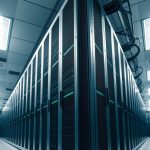
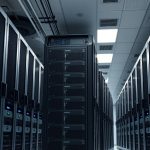
Building generative AI models and running large-scale inference operations requires massive compute clusters. This hunger for resources means AI infrastructure IPv4 addressing has become a critical bottleneck for data center architects and network engineers. It’s a harsh reality. As the demand for high-performance computing (HPC) explodes, the scarcity of IPv4 addresses presents a unique challenge that requires immediate, strategic planning.
The Unique Demands of AI on Network Resources
This isn’t like traditional virtualization or web hosting. AI training involves thousands of GPUs operating in unison. The result is a dense “east-west” traffic pattern, where nodes communicate constantly to synchronize model parameters.
Need IPv4 addresses?
Browse clean, RIPE-verified subnets at $0.50/IP/month.
That density translates directly into IP address requirements. Every GPU server, storage node, Top-of-Rack (ToR) switch, and management interface needs a unique address. It adds up fast. Plus, modern AI fabrics often lean on technologies like Remote Direct Memory Access (RDMA) over Converged Ethernet (RoCE). These setups require specific IP subnetting designs to ensure low latency and lossless packet delivery.
Why IP Address Planning is Critical in AI Clusters
For network engineers, the primary goal is uptime. Performance comes next. Poor AI infrastructure IPv4 planning introduces latency and routing inefficiencies that can stall training jobs costing thousands of dollars per hour.
Scalability and Hierarchical Design
AI clusters rarely stay static. They grow in phases. A flat network design might survive a pilot project of 128 GPUs, but it will collapse when scaling to 4,000 or more. Engineers must implement hierarchical addressing that aligns with the physical and logical topology of the data center.
- Aggregation Blocks: Allocating larger blocks (e.g., /16 or /20) to distinct pods or racks allows for easier aggregation in routing tables, keeping router CPU loads low.
- Subnetting for Virtualization: AI workloads often utilize container orchestration (like Kubernetes) or virtual machines. Each pod or VM needs its own IP, necessitating significantly larger address pools than physical infrastructure alone would suggest.
Managing NAT vs. Routing
Network Address Translation (NAT) is a common crutch for IPv4 scarcity. But in AI training, it hurts. NAT introduces processing overhead and complicates the debugging of network fabric issues. Direct routing is preferred for high-performance AI fabrics, making the acquisition of sufficient public or routable IPv4 space a priority for ISP operators hosting AI clients.
Strategies for Efficient IPv4 Allocation in AI
Squeeze every bit of utility out of your existing IPv4 assets before buying new space. The following table outlines common subnetting strategies used in high-density compute environments.
| Strategy | Best Use Case | Pros | Cons |
|---|---|---|---|
| Fixed-Size Subnetting | Uniform rack configurations | Simplified management, easy automation | Wastes addresses if racks are partially filled |
| Variable Length (VLSM) | Mixed workload clusters (Storage + Compute) | Highly efficient address utilization | Complex documentation required |
| Overlapping Subnets (VRF) | Multi-tenant AI cloud providers | Reuses same IP ranges for different clients | Requires complex VRF-Lite or MPLS configuration |
IPAM Integration
You can’t skip an IP Address Management (IPAM) tool. It’s non-negotiable. Manual spreadsheets cannot track the rapid provisioning and de-provisioning of AI nodes. Automation through IPAM ensures that IP conflicts do not occur during autoscaling events.
Sourcing IPv4 Blocks for Expansion
Regional Internet Registries (RIRs) like ARIN and RIPE NCC have run dry. They don’t have free IPv4 addresses left. Growing your AI infrastructure IPv4 allocation means entering the transfer market. For ISPs and large enterprises, this is now a strategic procurement game.
The market has matured, and pricing is relatively stable, though demand from AI hyperscalers is pushing prices up. When looking to acquire blocks, organizations must ensure they are dealing with verified sellers. Fraud happens, and RIR transfer restrictions can complicate things.
IP4 Market offers a trusted platform for these transactions, streamlining the complex transfer process. By providing vetted inventories and competitive pricing, platforms like IP4 Market help network managers secure the contiguous /24 or larger blocks required for clean subnetting. It saves you the administrative headache of negotiating directly with unknown sellers.
Future-Proofing Your Network
IPv6 is the long-term solution, sure. But the operational reality of today’s AI hardware and software ecosystems is still rooted in IPv4. Many legacy applications and management tools simply do not fully support IPv6 yet.
Network engineers should adopt a “dual-stack” approach where possible. But prioritize IPv4 acquisition for the compute fabric itself. You need compatibility with the widest range of AI frameworks and monitoring tools right now.
Summary Checklist for Engineers
- Audit current usage: Find the unused space in your existing allocations.
- Plan for oversubscription: Allocate 20-30% more space than your current physical node counts for future growth and virtualization.
- Secure contiguous blocks: Buy blocks that allow for route summarization.
- Verify transfer history: Make sure the purchased IPs are clean and not blacklisted.
The architecture of your network dictates the speed of your AI innovation. Treat IP address space as a critical asset and plan rigorously. If you do, your infrastructure will be ready to scale when the next generation of generative models arrives.
Need IPv4 space? Lease RIPE-verified /24–/22 subnets at a flat €0.50/IP per month — LOA + RPKI/ROA in minutes, instant company verification, automatic renewals. Browse available subnets →